%20-%20http://www.bohemiancoding.com/sketch%20--%3e%3ctitle%3eLogo%3c/title%3e%3cdesc%3eCreated%20with%20Sketch.%3c/desc%3e%3cg%20id='Page-1'%20stroke='none'%20stroke-width='1'%20fill='none'%20fill-rule='evenodd'%3e%3cg%20id='logo-gap'%20transform='translate(-21.000000,%20-21.000000)'%3e%3cg%20id='Verysite_2018_Logo_gap'%3e%3cg%20id='Logo'%20transform='translate(20.895000,%2021.072000)'%3e%3cpath%20d='M59.178,0.456%20C91.6442925,0.457642562%20117.970749,26.7617206%20118,59.228%20C118,91.7142174%2091.6647174,118.0495%2059.1785,118.0495%20C26.6922826,118.0495%200.357,91.7142174%200.357,59.228%20C0.386250972,26.762111%2026.7120979,0.458194449%2059.178,0.456%20Z'%20id='Path_1430'%20fill='%23293338'%3e%3c/path%3e%3cpolygon%20id='Path_11112'%20stroke='%23293338'%20stroke-width='3'%20fill='%23F4FAFF'%20stroke-linecap='round'%20stroke-linejoin='round'%20points='71.085%2089.532%2046.159%2089.532%2019.526%2045.005%2034.226%2027.942'%3e%3c/polygon%3e%3cpolygon%20id='Path_11113'%20stroke='%23293338'%20stroke-width='3'%20fill='%23FDCB00'%20stroke-linecap='round'%20stroke-linejoin='round'%20points='46.176%2089.532%2071.096%2089.532%2097.743%2045.005%2083.031%2027.941'%3e%3c/polygon%3e%3c/g%3e%3c/g%3e%3c/g%3e%3c/g%3e%3c/svg%3e "VeryCreatives")

Understanding Mobile-First Development
The landscape of mobile development has transformed dramatically since Luke Wroblewski first coined the term “mobile-first” in 2009.
What began as a simple principle—design for phones before desktops—has evolved into a complex strategic imperative.
Mobile-first approach demands more than responsive layouts; it requires rethinking how users interact with software in an increasingly mobile-centric world.
Modern SaaS products face unprecedented challenges in mobile development. Foldable displays, gesture-based interfaces, and seamless cross-device experiences have redefined user expectations.
The companies that thrive don’t just adapt their desktop experiences to mobile—they reimagine their entire product strategy around mobile-first principles.
Key Principles of Mobile-First Design
The evolution of mobile-first design has transformed how we approach SaaS development.
While early mobile-first principles focused primarily on responsive layouts, modern approaches demand a deeper understanding of user context, device capabilities, and interaction patterns.
These principles guide developers and designers beyond simple screen adaptation toward creating truly native mobile experiences that enhance productivity across all platforms.
Strategic Feature Prioritization
Mobile-first development demands ruthless prioritization, but not just of screen space. Each feature must justify its existence through clear user value.
This constraint drives innovation—successful mobile-first products often discover elegant solutions that work better across all platforms.
The rise of gesture-based interfaces has prompted many SaaS products to simplify their navigation patterns, benefiting both mobile and desktop users.
Consider how modern email applications have abandoned complex folder hierarchies in favor of intuitive swipe actions and smart categorization.
These simplifications often reveal unnecessary complexity in traditional interfaces, leading to better experiences across all devices.
This strategic restraint extends to data presentation. Mobile constraints push teams to identify truly essential metrics and information hierarchies.
Design for Natural Interaction
Modern mobile interfaces extend beyond simple touch interactions. Voice commands, haptic feedback, and predictive interfaces create more natural, contextual experiences.
Successful mobile-first design anticipates user needs and provides multiple interaction paths—touch, voice, or gesture—depending on the context.
Natural interaction design considers environmental factors. Users might switch between one-handed phone use while commuting, voice commands while driving, or precise touch input while seated.
Each context demands different interaction patterns. Progressive mobile-first design adapts seamlessly to these changing contexts, maintaining functionality while optimizing for the current usage mode.
The best mobile-first interfaces learn from user behavior. They anticipate common actions based on time, location, and past behavior.
A field service app might prominently display nearby assignments during work hours but prioritize report completion tools at day’s end.
Performance as User Experience
Performance optimization now extends beyond simple page load times.
Modern mobile-first development demands sophisticated caching strategies, predictive pre-loading, and intelligent asset management.
Edge computing and 5G capabilities enable new possibilities for real-time collaboration and data processing at the device level.
Mobile performance encompasses perceived performance—how fast an interface feels—as well as actual loading speeds.
Skeleton screens, optimistic updates, and background data synchronization create fluid experiences even under variable network conditions.
These techniques become particularly crucial for data-heavy applications that must maintain responsiveness despite complex operations.
Smart caching strategies now consider user context and behavior patterns.
Applications might pre-load data for upcoming meetings, cache frequently accessed documents, or maintain offline functionality for critical features.
This contextual performance optimization ensures smooth experiences even in challenging mobile environments.
Progressive Enhancement Reimagined
Progressive enhancement has evolved from a simple “mobile-to-desktop” pathway into a multi-dimensional approach.
Modern applications must gracefully adapt not only to different screen sizes but also to varying network conditions, device capabilities, and user preferences.
This adaptive approach ensures your application delivers its core value proposition regardless of context.
Modern progressive enhancement considers device capabilities beyond screen size.
Applications adjust to available memory, CPU power, battery status, and sensor availability.
A video conferencing app might seamlessly scale from full HD on powerful devices to optimized performance on lower-end hardware, all while maintaining core functionality.
This approach extends to feature availability. Rather than delivering a reduced experience on mobile, sophisticated applications provide alternative paths to value based on available capabilities.
When a desktop feature proves impractical on mobile, teams innovate to find novel solutions that might even improve the original design.
Implementing Mobile-First Practices in SaaS Product Development
The successful implementation of mobile-first practices requires a comprehensive approach that spans strategy, design, development, and team collaboration.
Modern SaaS products cannot treat mobile as an afterthought—they must embrace mobile-first thinking from initial concept through final deployment.
Strategic Foundation
Mobile-first strategy requires deep understanding of your users’ context-switching behaviors.
Modern users move fluidly between devices throughout their day, expecting their work state to follow them seamlessly.
Your strategy must account for these complex usage patterns and design appropriate synchronization mechanisms.
Understanding context goes beyond device transitions. Users access applications in various environments—during commutes, in meetings, at client sites—each presenting unique challenges and opportunities.
Prototyping for Context
Modern prototyping transcends traditional wireframing.
Tools like Figma now support dynamic constraints and interactive components that simulate real-world usage patterns.
Creating authentic prototypes means modeling not just layouts, but also state management, offline capabilities, and cross-device synchronization.
Effective prototyping must recreate real-world conditions.
This includes simulating network variability, testing different input methods, and validating cross-device workflows.
Teams must prototype not just the happy path but edge cases that mobile users frequently encounter.
Technical Architecture
Modern mobile-first development demands more sophisticated technical choices than just responsive frameworks.
While tools like Tailwind CSS provide excellent responsive capabilities, successful mobile-first applications require careful consideration of state management, offline-first architecture, and real-time synchronization patterns.
Consider adopting edge computing patterns and service worker strategies to enhance performance and reliability.
The technical foundation must support seamless experiences across varying network conditions. This includes implementing robust data synchronization, managing conflict resolution, and ensuring data integrity across devices.
The architecture should anticipate offline scenarios and provide graceful degradation of features when necessary.
Collaborative Development
Modern mobile-first development breaks down traditional roles.
Designers must understand technical constraints, developers need design thinking skills, and product managers must grasp both domains.
This collaboration extends beyond internal teams to include end-users throughout the development process.
Regular testing with users in their natural environments provides crucial insights into real-world usage patterns and challenges.
Accessibility as Core Design
Modern accessibility extends beyond traditional screen readers and keyboard navigation.
Mobile-first development must account for diverse interaction patterns: voice commands, gesture controls, and haptic feedback.
These features serve not just users with disabilities but enhance usability for everyone in various contexts, from hands-free operation to noisy environments.
Accessibility considerations must influence early architectural decisions. Features like voice interaction and haptic feedback require proper technical foundations.
Teams must plan for these capabilities from the start rather than treating them as optional add-ons.
Challenges and Solutions in Mobile-First Development
Mobile-first development presents unique challenges that extend far beyond responsive design.
Success requires addressing complex technical, user experience, and security considerations that impact every layer of application architecture.
Challenge 1: Complex State Management
Modern mobile apps must maintain consistency across offline states, background processes, and multiple devices.
Solutions involve implementing robust sync protocols, conflict resolution strategies, and careful consideration of data persistence patterns.
We recommend starting with clear data modeling and implementing optimistic UI updates to maintain responsive user experiences.
State management complexity increases with feature scope.
Applications must gracefully handle interrupted network connections, background process termination, and conflicting updates from multiple devices.
Implementing event sourcing patterns and conflict-free replicated data types helps manage this complexity while maintaining data integrity.
Challenge 2: Platform Fragmentation
Device fragmentation now extends beyond screen sizes to include foldable displays, variable refresh rates, and different CPU/GPU capabilities.
Success requires implementing adaptive rendering strategies and performance monitoring systems that optimize for device-specific capabilities while maintaining consistent user experiences.
Modern mobile development must account for an ever-expanding range of device capabilities.
Applications need intelligent feature detection and graceful degradation strategies.
Teams must balance utilizing cutting-edge device features while ensuring core functionality remains accessible across all supported platforms.
Challenge 3: Legacy System Integration
Many enterprises struggle to connect modern mobile interfaces with legacy backend systems.
The solution involves creating clean API abstraction layers and implementing edge computing patterns to handle data transformation and caching.
This approach shields mobile clients from legacy system complexities while maintaining performance.
Integration challenges often reveal deeper architectural needs.
Teams must design middleware layers that can transform legacy data structures into mobile-friendly formats, implement caching strategies that reduce load on legacy systems, and maintain data consistency across old and new platforms.
Challenge 4: Security and Privacy
Mobile-first applications face unique security challenges, from secure local storage to protection against man-in-the-middle attacks.
Modern solutions must implement robust encryption, secure authentication flows, and careful permission management while maintaining usability.
Security considerations extend throughout the application lifecycle.
Teams must implement secure data storage for offline access, protect against device-specific vulnerabilities, and maintain security during state synchronization.
This requires continuous security testing across different platforms and usage scenarios.
Case Studies: Mobile-First Success Stories
Locale:
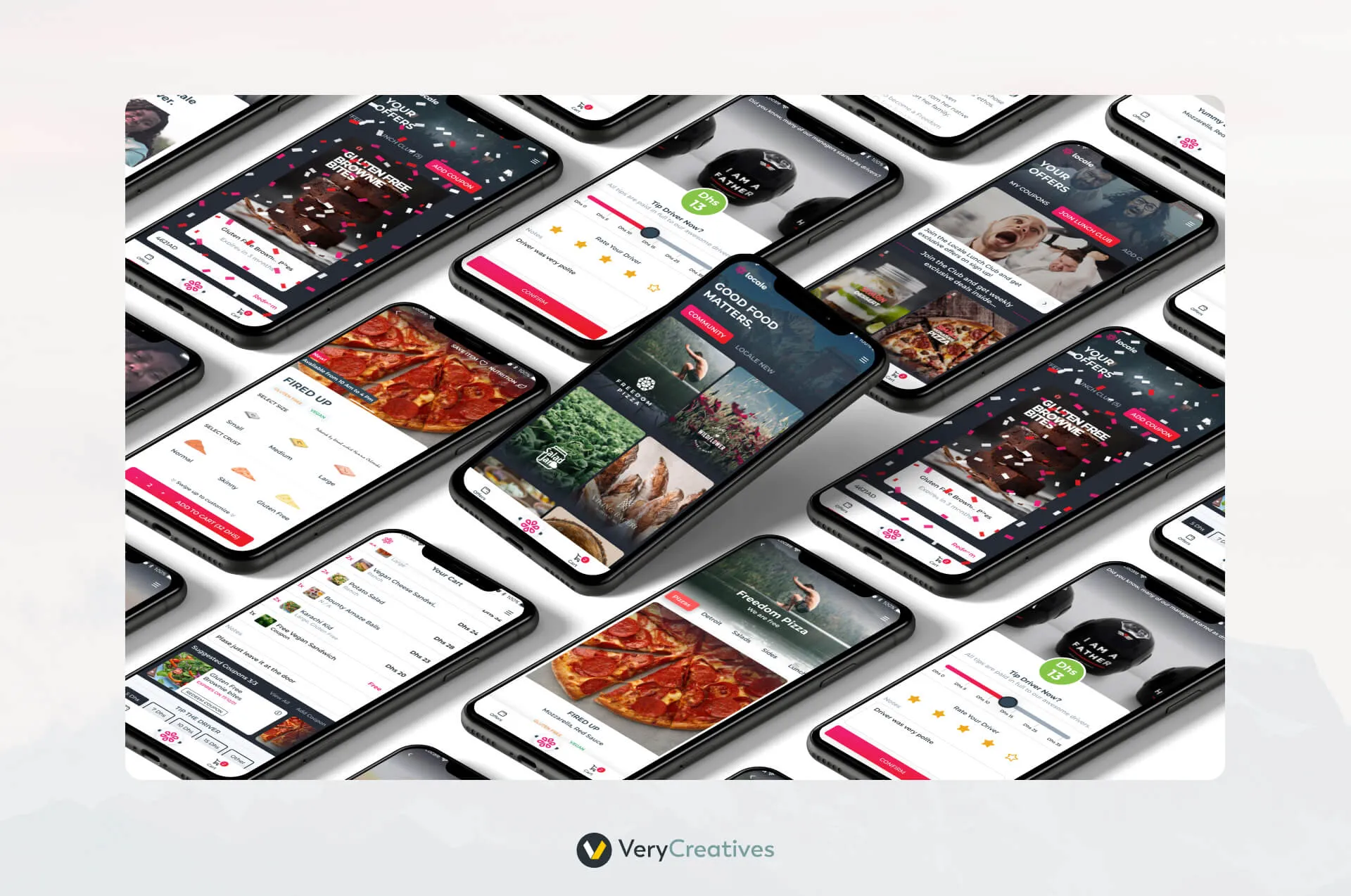
Locale revolutionizes how restaurants connect with customers in Dubai and Abu Dhabi.
The platform transforms traditional on-site ordering into a 24/7 digital ecosystem accessible via web and mobile through a partnership with VeryCreatives.
The platform empowers restaurant operators and customers with innovative features.
Locale delivers a smooth ordering experience by combining centralized menu management, real-time order tracking, and customizable dietary preferences into an intuitive interface.
Push notifications and an interactive support system ensure effective communication between all parties.
The impact of this digital transformation has been substantial. Within two years of launch, over half of all orders flow through digital channels.
Restaurant partners report improved order accuracy, and customers enjoy better visibility and control over their dining experience.
The platform has transformed multi-location establishments, improving operations and boosting efficiency.
Reachbird: Scalable Influencer Campaign Management
Managing influencer campaigns involves constant communication, deadline tracking, performance monitoring, and reporting.
Reachbird needed a way to make this entire workflow mobile-friendly without compromising on functionality.
VeryCreatives designed a robust mobile-first dashboard where brands and influencers can collaborate in real time.
Campaign briefs, application approvals, messaging, and payout processing were all optimized for smaller screens, enabling on-the-go campaign management.
Additionally, performance analytics were redesigned to be digestible and actionable on mobile, empowering marketers to make data-driven decisions from anywhere.
This significantly reduced time-to-launch for campaigns and improved transparency for all stakeholders.

JamDoughnut: Cash Rewards with Frictionless Mobile UX
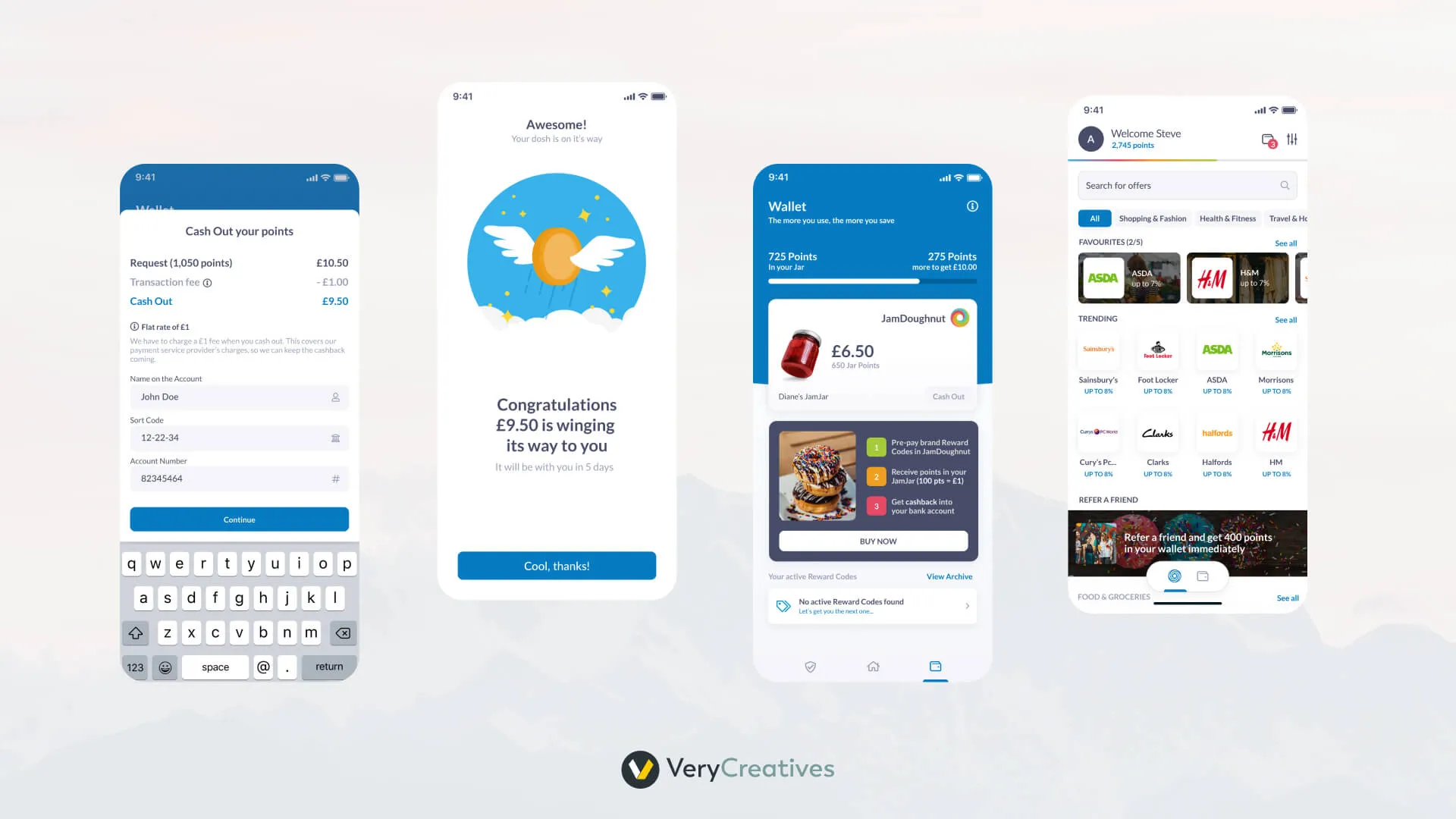
JamDoughnut is a cashback platform that rewards users for shopping at partner retailers.
The business model depends on habitual use, so mobile-first functionality was critical to success.
We helped the team rethink the app’s structure to maximize usability in quick, real-world scenarios—like standing in line at checkout or reviewing recent purchases.
We implemented fast-loading UIs, optimized in-app search and categorization, and simplified the cashback claiming process to just a few taps.
Smart caching and offline support ensured consistent performance even in low-connectivity environments.
As a result, the app became not just a rewards tool but a daily shopping companion, driving both retention and referral growth.
Conclusion
Mobile-first development has evolved from a design philosophy into a comprehensive approach for creating powerful, adaptive software experiences.
For SaaS founders, this evolution presents both challenges and opportunities.
Success requires careful consideration of technical architecture, user context, and security from day one.
Ready to build a mobile-first SaaS product that sets new standards in your industry? Book a call with our team to discuss how we can help bring your vision to life.